
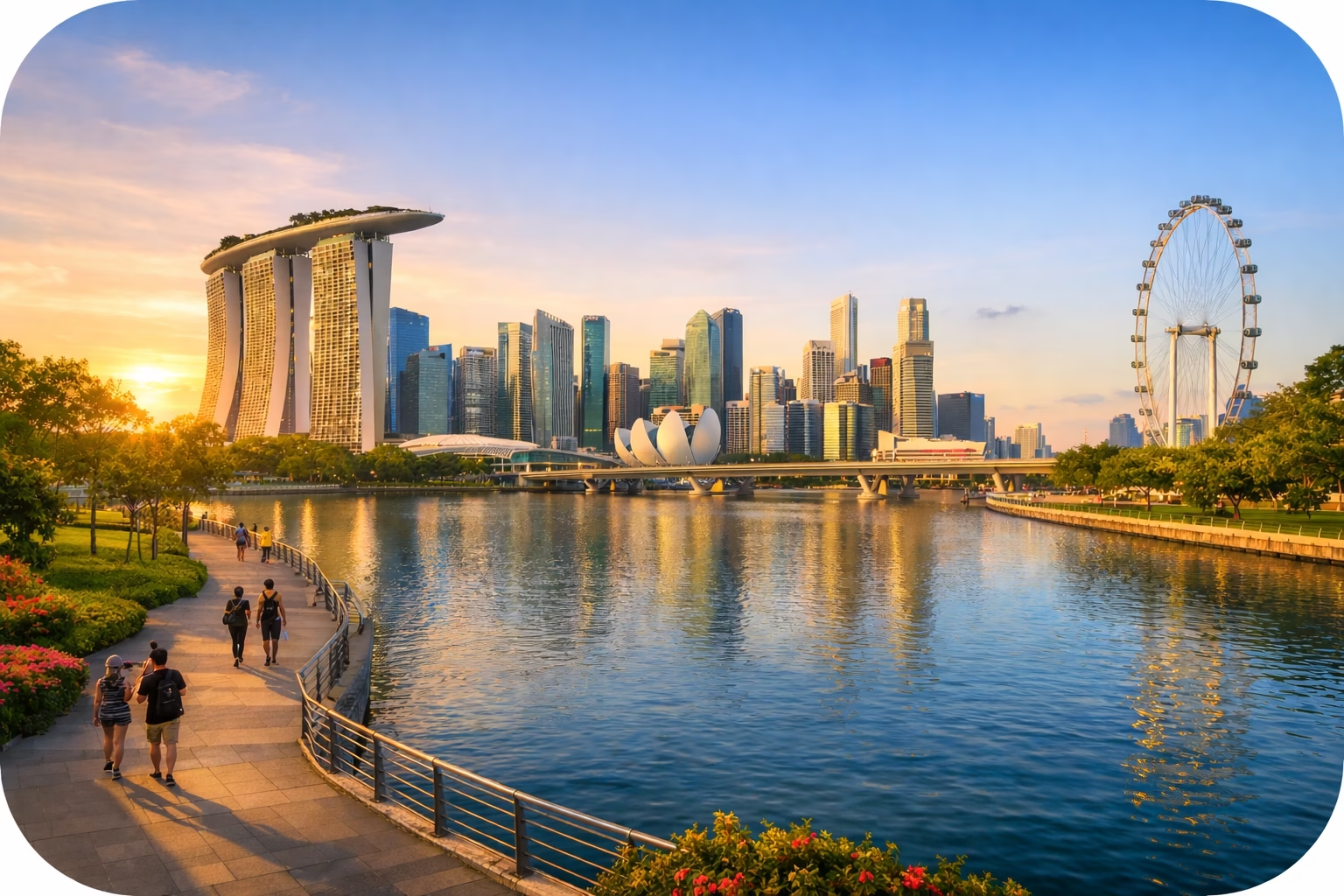
When people talk about the cleanest cities in Asia, opinions vary—but when facts, consistency, and real-world experience are checked carefully, Singapore clearly stands out. This modern city-state in Southeast Asia is widely recognized as the cleanest city in Asia due to its exceptionally clean streets, strict anti-littering laws, advanced waste management systems, and high civic discipline. From spotless public transport to crystal-clear waterfronts, Singapore has transformed cleanliness into a culture rather than a campaign, setting a benchmark that many Asian cities aim to follow.
Why Singapore Is Considered the Cleanest City in Asia
When people search for the cleanest city in Asia, one name consistently stands out—Singapore. This is not by chance or marketing hype. Singapore’s cleanliness is the result of decades of strict policies, advanced urban planning, and strong public discipline.
Unlike many cities where cleanliness depends only on municipal workers, Singapore follows a system-based approach where government rules, technology, and citizen responsibility work together.
Strict Laws That Actually Work
Singapore is famous for its zero-tolerance attitude toward littering. Throwing trash on the road, spitting, or smoking in restricted areas can lead to heavy fines. Repeat offenders may even be required to perform public cleaning duties.
These rules are not symbolic—they are actively enforced, which creates long-term behavioral change rather than short-term fear.
World-Class Waste Management System
Singapore uses a waste-to-energy model, where most non-recyclable waste is burned safely to generate electricity. This reduces landfill use and prevents open dumping, which is a major cause of pollution in Asian cities.
Recycling bins are placed strategically across residential, commercial, and public transport areas, making waste segregation easy for everyone.
Clean Air and Water Quality
Despite being highly urbanized, Singapore maintains excellent air quality due to:
- Strict vehicle emission norms
- Heavy promotion of public transport
- Limited private vehicle ownership
- Continuous air monitoring
Tap water in Singapore is safe to drink directly, which is extremely rare in Asia and reflects strong environmental governance.
Urban Design That Supports Cleanliness
Singapore’s infrastructure is designed to stay clean:
- Smooth pavements that don’t trap dust
- Covered drains to prevent garbage accumulation
- Green buffers between roads and residential areas
- Regular mechanical street cleaning
Even public toilets, metro stations, and food courts meet high hygiene standards.
Public Discipline and Civic Sense
Cleanliness in Singapore is not only about rules—it’s also cultural. From school education to national campaigns, citizens are taught that cleanliness is a shared responsibility. This mindset makes enforcement easier and results long-term sustainability.
Why Tourists Love Singapore’s Cleanliness
For travelers, Singapore feels safe, organized, and comfortable. Visitors often notice:
- No garbage piles on streets
- Clean beaches and parks
- Hygienic food markets
- Odor-free public transport
This makes Singapore one of the most tourist-friendly cities in Asia.
Comparison With Other Asian Cities
Cities like Tokyo, Seoul, and Taipei are also extremely clean, but Singapore stands apart because:
- It combines strict law enforcement with modern technology
- It has consistently low pollution levels
- It maintains cleanliness across all areas, not just central zones
A: Singapore is widely considered the cleanest city in Asia due to strict cleanliness laws, advanced waste management, and excellent air and water quality.
A: Singapore is located in Southeast Asia, at the southern tip of the Malay Peninsula.
A:Singapore maintains cleanliness through strict fines, public discipline, modern urban planning, and efficient waste management systems.