
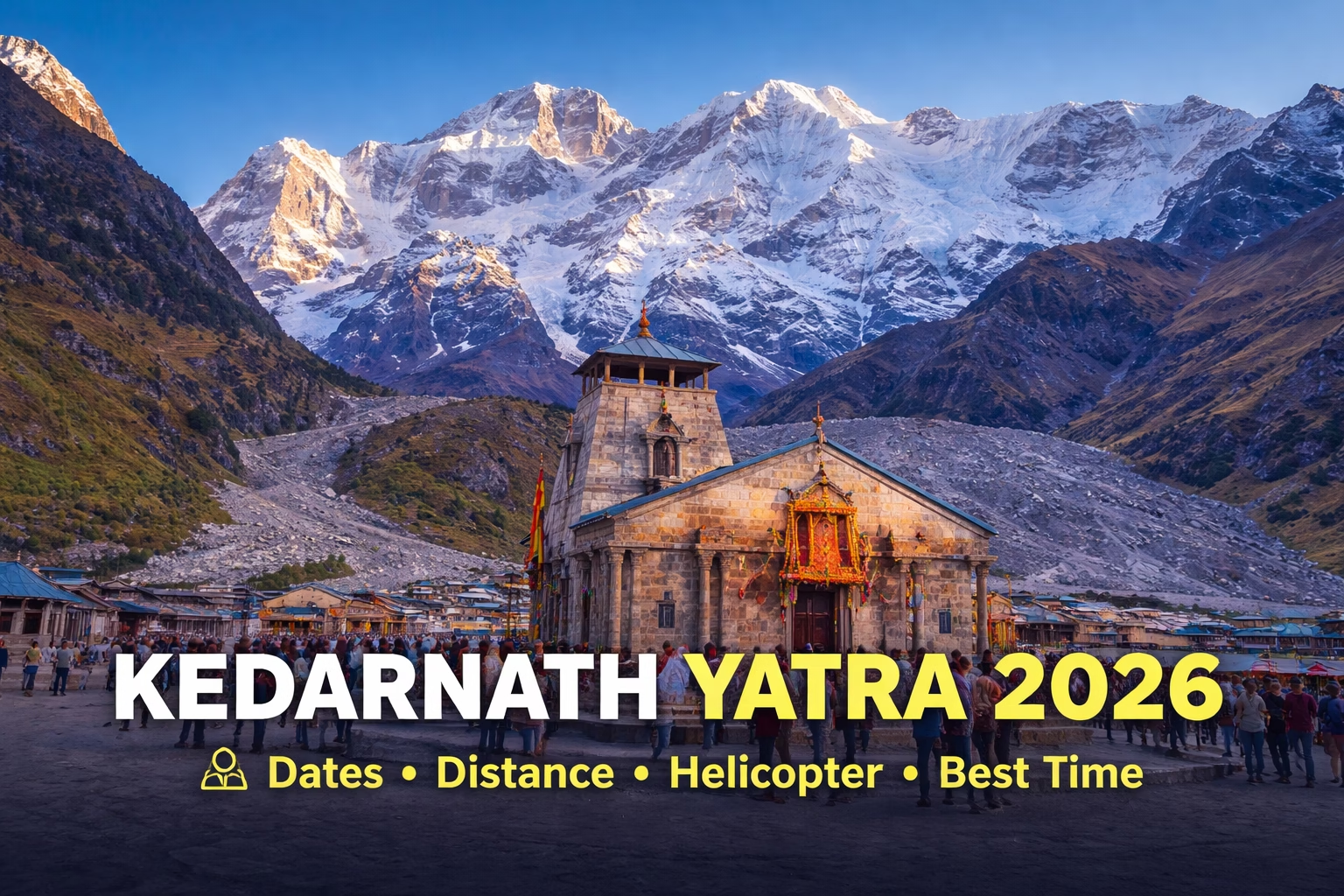
Every year, somewhere between late April and early May, a procession of priests carries a sacred palanquin out of the Omkareshwar Temple in Ukhimath and begins walking uphill toward a valley that has been buried under snow for six months. This is how Kedarnath wakes up. Not with a press release. Not with a tweet. With walking men, Vedic chants, a bronze idol wrapped in marigolds, and the slow, deliberate logic of a tradition older than the nation-state.
In 2026, the Kedarnath Temple Kapat — the sacred doors — will open on Wednesday, 22 April, at 8:00 AM. The date was announced on Maha Shivaratri, 15 February 2026, by the Badrinath-Kedarnath Temple Committee (BKTC) at the Omkareshwar Temple in Ukhimath, exactly as it has been done for centuries. No algorithm decided it. The temple priests calculated it from the Panchang — the Hindu almanac — tied to the auspicious alignment of Akshaya Tritiya.
This guide was written for the person who wants real answers: what the journey from Haridwar actually feels like, what the helicopter booking portal will and won’t tell you, which month to visit based on what you value (not what the packages want to sell), and what the mountain silently expects before it lets you stand before the Jyotirlinga.
22 Apr Kapat Opens
3,583mTemple Altitude
16 kmTrek from Gaurikund
247 kmRoad from Haridwar
7 minHelicopter Flight
Section 01 — The Kapat
Kedarnath Opening Date 2026: What the Announcement Really Means
The date is 22 April 2026. But understanding why it is that date — and what happens in the days leading up to it — changes how you experience the arrival entirely.
On Maha Shivaratri, the head priest (Rawal) of the Kedarnath Temple, together with committee members and Vedapathis at the Omkareshwar Temple in Ukhimath, performs a calculation of the Panchang and announces the exact opening day and auspicious time (muhurta). For 2026, that moment is Vrishabha Lagna at 8:00 AM on 22 April — an alignment considered particularly sacred for Shiva worship.
What follows is the Doli Yatra: a two-day ceremonial procession. On Day One, the Panchmukhi Doli (five-faced palanquin carrying the idol) departs Ukhimath and rests overnight at the Vishwanath Temple in Guptkashi. On Day Two, it moves to Phata. On the morning of 22 April, the Doli arrives at Kedarnath as the temple opens. Pilgrims who witness this procession in Guptkashi — easily accessible by road the night before — often call it the most moving part of the entire yatra.
About the Closing Date
The temple will close for winter on Bhai Dooj, two days after Diwali — expected around 11 November 2026. After closure, the idol returns to Ukhimath for winter worship. The exact date is confirmed on Vijayadashami (September 11, 2026). If you are planning an October visit, verify the final closing date before booking anything non-refundable.
The temple observes strict daily timings: 6:10 AM to 1:00 PM and again from 5:00 PM onwards. It closes from 3:00 PM to 5:00 PM. For early arrivals — those who trekked overnight or spent the night at Kedarnath — the 4:00 AM Abhishek Puja (bathing of the Lingam with milk, curd, honey, and water) is a separate and deeply intimate experience that regular darshan queues cannot replicate. Priority darshan and Abhishek slots must be booked on-site at the counter.
“When the temple doors open for the first time after winter, the air inside still carries the cold of six months of snow. The first incense smoke of the season rises into that cold. Nothing explains why that is moving. It simply is.”— Documented observation from the 2025 Kapat opening
Haridwar, Rishikesh & Dehradun to Kedarnath:
Most travel sites give you a road distance and a time and stop there. Here is what those numbers actually contain — and where they quietly lie.
The road ends at Sonprayag. Private vehicles are not permitted beyond it. From Sonprayag, a government shuttle covers the 5 km to Gaurikund. From Gaurikund, you walk — or ride a pony, or take a palki — for 16 km uphill to the temple. The “distance to Kedarnath” that most sites quote is therefore the distance to a point from which you still have hours of climbing ahead.
| Starting City | Road to Sonprayag | Drive Time | Trek Ahead |
|---|---|---|---|
| Haridwar | ~247 km | 8–10 hrs | 16 km / 5–8 hrs |
| Rishikesh | ~225 km | 7–9 hrs | 16 km / 5–8 hrs |
| Dehradun | ~270 km | 10–11 hrs | 16 km / 5–8 hrs |
| Delhi | ~450 km | 12–14 hrs | 16 km / 5–8 hrs |
Haridwar — The Most Common Gateway
Haridwar is where most pilgrims arrive by train from across India — it sits on the main Delhi-Dehradun rail corridor and has fast connectivity from Mumbai, Kolkata, and Chennai overnight. The road from Haridwar to Sonprayag passes through Rishikesh (24 km, 45 min), Devprayag (70 km, 2 hrs from Rishikesh — where the Bhagirathi and Alaknanda merge into the Ganga), Srinagar, Rudraprayag, Agastmuni, and Guptkashi. It is a journey through successive river confluences, each holier than the last. Most experienced pilgrims stop for tea in Guptkashi and again at the Vishwanath Temple before pushing to Sonprayag.
Road conditions are smooth on the Haridwar–Devprayag stretch but narrow significantly as you enter the river gorge beyond Srinagar. After heavy rains, debris can close lanes near Rudraprayag — always check the Uttarakhand highway alert portal before departing.
Transport Cost Guide from Haridwar (2026 Season)
Private taxi (sedan): ₹3,500–₹5,500 to Sonprayag
Private SUV (Innova/Ertiga): ₹4,500–₹7,000 to Sonprayag
State GMOU bus: ₹400–₹700 per seat to Sonprayag (10–12 hrs)
Shared jeep from Rishikesh: ₹400–₹700 per seat
Sonprayag → Gaurikund shuttle: ₹30–₹50 government rate
Rishikesh — Closer, Calmer, Better for Acclimatization
At 25 km beyond Haridwar and 356 metres above sea level (versus Haridwar’s 249m), Rishikesh offers a marginally better altitude baseline for pilgrims traveling from the plains. More importantly, it has quieter streets, excellent budget and mid-range guesthouses, and the psychological benefit of the Ganga before the climb begins. Pilgrims who spend one night in Rishikesh before proceeding to Guptkashi tend to handle the altitude better than those who drive straight through from Haridwar or Delhi. The nearest airport — Jolly Grant, Dehradun — is 25 km from Rishikesh.
Dehradun — The Airport Gateway
Jolly Grant Airport (DED) receives daily flights from Delhi, Mumbai, Bengaluru, and Hyderabad. It is the preferred entry point for pilgrims arriving by air. From the airport, the road journey to Sonprayag takes 7–8 hours, typically via Rishikesh, which adds 40 km but offers better road facilities. Dehradun is also the base for charter helicopter packages (Char Dham by helicopter), departing from Sahastradhara Helipad — an entirely different, premium experience covered briefly below.
“The road is the yatra. The people you share it with — the tea stall owner at Rudraprayag, the elderly woman who has done this thirty times — are part of what you carry back.”
Kedarnath Helicopter Booking 2026: What IRCTC Won’t Tell You Upfront
The helicopter to Kedarnath converts a 16-km uphill trek (5–8 hours) into a 7-minute flight over the Garhwal Himalayas. For elderly pilgrims, those with health conditions, or anyone on a compressed itinerary, it is not a luxury — it is a legitimate and often necessary choice. Here is how it actually works, including the parts operators tend to downplay.
The only authorised booking portal
heliyatra.irctc.co.in — this is the sole, government-authorised platform for Kedarnath shuttle helicopter tickets. Every other website, WhatsApp contact, travel agent, or hotel desk offering to “arrange” helicopter tickets is operating outside this system. Some are running outright scams. Some pooled-slot agents register tickets under their own accounts, which can invalidate your booking at the helipad. Book yourself, directly, for free.
Fraud Warning — Read Before You Book Anywhere
The Special Task Force helpline for Yatra-related fraud is 1090. IRCTC’s 24×7 helpline is 1800 110 139. If anyone asks you to pay outside the official portal, or claims the portal is “full” or “broken” — hang up. The portal works. It just requires patience during the first few hours of a new booking window opening.
Booking window for 2026
Phase 1 opened on 15 April 2026 at 6:00 PM for travel dates 22 April to 15 June. Phase 2 (post-monsoon season) dates will be announced separately. Seats vanish within hours of opening. Set a reminder. Log in 10 minutes early. Have your Char Dham Yatra Registration Number ready — without it, you cannot proceed past the first booking screen.
The three helipads — which should you choose?
1.Phata
8–10 min flight
₹7,000–7,500/return
2.Sirsi
5–7 min flight
₹6,500–7,500/return
3.Guptkashi
15 min flight
₹8,500/return
Prices are government-regulated and subject to dynamic pricing: +20% for bookings 6–15 days ahead; +40% for 1–5 days; +50% on the same day. Add ₹300/passenger convenience fee + 18% GST. Book early for base rates.
Practically: Phata and Sirsi are the most commonly used helipads — they are close to Sonprayag and have the most regular services. Guptkashi is useful if you are basing yourself there the night before. The flight from any helipad puts you down about 500 metres from the temple steps. From there, a short walk leads to the main temple complex.
Step-by-step booking
- Complete free Char Dham Yatra registration at registrationandtouristcare.uk.gov.in. Download your QR-coded Yatra Pass. This is the non-negotiable first step.
- Create an IRCTC account at heliyatra.irctc.co.in(or log in if you have one). Verify mobile and email via OTP.
- Click “Book Ticket.” Enter your Yatra Registration Number and submit.
- Select your preferred helipad, travel date, and time slot. A list of aviation companies with available slots and prices will appear.
- Choose a slot. Enter all passenger detailsexactlyas on government ID — name spelling mismatches are the most common cause of boarding refusal.
- Pay through IRCTC’s payment gateway. Download andprintyour ticket. Screenshots will not be accepted at the helipad.
- Arrive at the helipad at least one hour before your slot. Carry original government ID matching the ticket.
The Weather Caveat Nobody Leads With
Helicopter flights to Kedarnath are cancelled frequently — sometimes several days in a row — due to cloud cover, high winds, and poor visibility in the mountain valley. If your entire yatra plan has one day allocated to Kedarnath and it depends on a helicopter, you are gambling. Always build at least one buffer day into your itinerary. Refunds for cancellations due to weather are processed, but the experience of missing darshan entirely is not something any refund policy addresses.
When to Go
Best Time to Visit Kedarnath: The Honest Month-by-Month Answer
Most guides answer this question by month name. The better answer is by what you are optimizing for — because May and September are both “good” months in very different ways, and what is right for a family of four is wrong for a solo trekker who wants an empty trail.
Best Season
May – June
Day temps 8–18°C. All facilities open. High crowds but maximum safety infrastructure. Best for first-timers, families, senior citizens.
Hidden Gem
Sept – Oct
Post-monsoon clarity. Best mountain views of the year. Fewer pilgrims, shorter queues. October nights are sub-zero — pack accordingly.
Avoid
July – August
Peak monsoon. Landslides close the road routinely. Helicopter services suspended. Trail becomes dangerously slippery. Not worth the risk.
Temple Closed
Nov – April
Deep snow, sub-zero temperatures, inaccessible valley. The idol is at Ukhimath. Visit Ukhimath for winter darshan.
Here is what the data from the 2026 season shows about specific months:
| Month | Day Temp | Night Temp | Crowd Level | Verdict |
|---|---|---|---|---|
| Late April | 5–10°C | -2 to 2°C | Very low | Opening energy, cold, limited facilities |
| May | 8–15°C | 2–6°C | High | Best month overall |
| June | 10–18°C | 4–8°C | Very high | Warm, festive, very crowded |
| July–Aug | 8–14°C | 6–11°C | Very low | Skip — landslide risk |
| September | 6–14°C | 3–7°C | Moderate | Best views, quieter |
| October | 2–10°C | -4 to 0°C | Low | Clear skies, cold nights, temple closing soon |
If you can only go once: Visit in the second half of May. The snow patches on the trail are gone, temperatures allow comfortable trekking, the valley is at its greenest before the rains, and all facilities — medical posts, helicopter services, accommodation — are fully operational. Crowds are real, but manageable if you start the trek before 6:00 AM.
If you want the mountain, not the crowd: Go in late September. The monsoon has scrubbed the sky clean. The peaks appear sharper than at any other time of year. Daily footfall at the temple is a fraction of the May numbers. You will find accommodation easily and experience darshan without the two-hour queues of peak season.
Do not underestimate October cold: Many pilgrims learn this the hard way. A night at Kedarnath base camp in October can drop to -4°C. Without a proper sleeping bag and thermal layers, it is a sleepless, miserable night at 11,755 feet.
The Kedarnath Temple: What You Are Actually Walking Toward
The Temple that stands at the head of the Mandakini River valley is, by any engineering measure, extraordinary. Built in interlocking grey granite using the Kathkuni construction method — no mortar, no cement, stones locked by gravity and geometry — it has survived avalanches, earthquakes, and the catastrophic 2013 cloudburst that killed over 5,000 people in the surrounding valley. During those 2013 floods, a massive boulder — which the local people call the Bheem Shila — lodged itself directly behind the temple and diverted the flood debris around it. The temple emerged without structural damage. The meaning people draw from that fact is their own to keep.
The temple is dedicated to Lord Shiva as one of the twelve Jyotirlingas — the most sacred shrines in the Shaiva tradition. The Lingam inside is a swayambhu (self-manifested) form: a triangular, hump-shaped rock that devotees believe represents the hump of Nandi, the sacred bull. Unlike most Shiva temples, direct physical contact with the Lingam is permitted — pilgrims can touch it, wrap their arms around it, press their forehead to it. In the moments before the morning crowd arrives, this contact is all the reason anyone needs to have made the journey.
Beyond the main temple, the valley holds the Bhairavnath Temple — considered the watchman of Kedarnath, positioned on a hill overlooking the complex — and the Chorabari Lake (Gandhi Sarovar), a glacial lake 3 km further up, where Mahatma Gandhi’s ashes were immersed. The trek to Chorabari from the temple takes about 90 minutes and rewards with views of the Chorabari Glacier at close range.
The Abhishek Puja — Worth the 4 AM Wake-Up
The Abhishek Puja begins at 4:00 AM and involves the ritual bathing of the Lingam with panchamrit (milk, curd, honey, sugar, ghee). Access is limited. Book the slot at the temple counter in person — it cannot be booked online. If you are spending the night at the base camp, this is the experience that separates a Kedarnath visit from a Kedarnath pilgrimage.
Section 06 — Practical Truth
What the Mountain Actually Asks of You
Every travel guide ends with a packing list. This one ends with something harder to pack.
- Register before everything else.Char Dham registration atregistrationandtouristcare.uk.gov.inis free, mandatory, and takes 10 minutes. Without your QR-coded Yatra Pass, you will be turned back at Sonprayag. You cannot borrow someone else’s. There is no workaround. Registration is the first act of the yatra.
- Acclimatize.Kedarnath sits at 3,583 metres — above the altitude threshold where Acute Mountain Sickness becomes a real risk for people arriving from the plains. Spend one night at Guptkashi (1,319m) or Sonprayag before starting the trek. If you develop a severe headache, vomiting, or disorientation, descend immediately. No darshan is worth a medical emergency at altitude.
- Start the trek by 5:30 AM.The 16 km trail from Gaurikund climbs 1,500 metres. Starting early means reaching the temple while it is still open (closes 1:00 PM for afternoon break), avoiding the worst crowd bottlenecks at the midpoint chai stalls, and having energy for the return leg. Afternoon arrivals routinely find the temple closed and themselves stranded for hours.
- Carry cash.ATMs disappear after Guptkashi. BSNL has the most reliable mobile signal in the high valley — Airtel works at Kedarnath, Jio is intermittent beyond Sonprayag. Inform your bank before travel to avoid transaction blocks on mountain-area spending.
- Dress for cold, not the season.Even in June, Kedarnath nights drop to 4–8°C. Thermal base layers, a windproof mid-layer, and a rain poncho are not optional. Trekking shoes with ankle support — not sports sneakers — for the 16 km trail. Sandals and flat-soled footwear cause injuries on the wet stone sections near Gaurikund.
- The return trek feels longer than the ascent.The human knee disagrees with 16 km of downhill stone steps. Trekking poles prevent the knee pain that turns a triumphant return into a limping ordeal. Rent them in Gaurikund if you do not own a pair.
- Book accommodation before you leave home.In May and June, guesthouses in Gaurikund, Kedarnath base camp, and Guptkashi sell out weeks ahead. GMVN (Garhwal Mandal Vikas Nigam) government guesthouses are bookable at gmvnl.in and offer fair rates and reliable quality. Walking in without a booking in peak season means overpriced tent accommodation or a forced descent.
“The mountain does not ask for fitness certificates. It asks only for preparation — and the honesty to know the difference between what you want it to mean and what you are actually capable of.”
The Kedarnath Yatra in 2026 will draw lakhs of pilgrims. The infrastructure is better than it has ever been. Helicopter services are expanded. Registration is streamlined. Medical posts are positioned at regular intervals on the trail. The conditions for a safe, successful yatra exist. What makes the difference, as it always has, is the preparation the pilgrim brings.
The doors open 22 April at 8:00 AM. What happens next is yours to plan.
- Best Places to Visit in October: Top Destinations for an Unforgettable Trip

- Neem Karoli Baba :Life, Teachings, Kainchi Dham and His Spiritual Legacy
- Hanuman Ansh Movie and Kainchi Dham: Visit the Place of Neem Karoli Baba

- How to Reach Valley of Flowers from Delhi

- Best Travel Insurance Canada 2026: Compare Plans & Save Up to 40%